


This Post Include Following Topics
Thousands of aspirants compete every year for the Computer Officer position under Nepal’s Public Service Commission — and the difference between passing and failing often comes down to one thing: knowing what to expect before you walk into that exam hall.
If you’re preparing for the Lok Sewa Aayog (PSC Nepal) Computer Officer exam, you’ve landed in the right place. This post gives you the complete, verified question set from the 2083/01/10 Technical Subject (Second Paper) — one of the most sought-after past papers among serious candidates.
Why does this matter? Because PSC Nepal follows predictable patterns. Questions repeat. Themes recur. Candidates who study old papers consistently outperform those who don’t.
What’s inside this post:
- Full question paper from 2083 (Gazetted Third Class, Technical)
- Exam overview: marks, timing, and paper structure
- Key topics that keep appearing year after year
Whether you’re a first-time applicant or retaking the exam, this resource will sharpen your preparation and save you hours of searching.
We also Prepare these topics for you
Here are the full questions
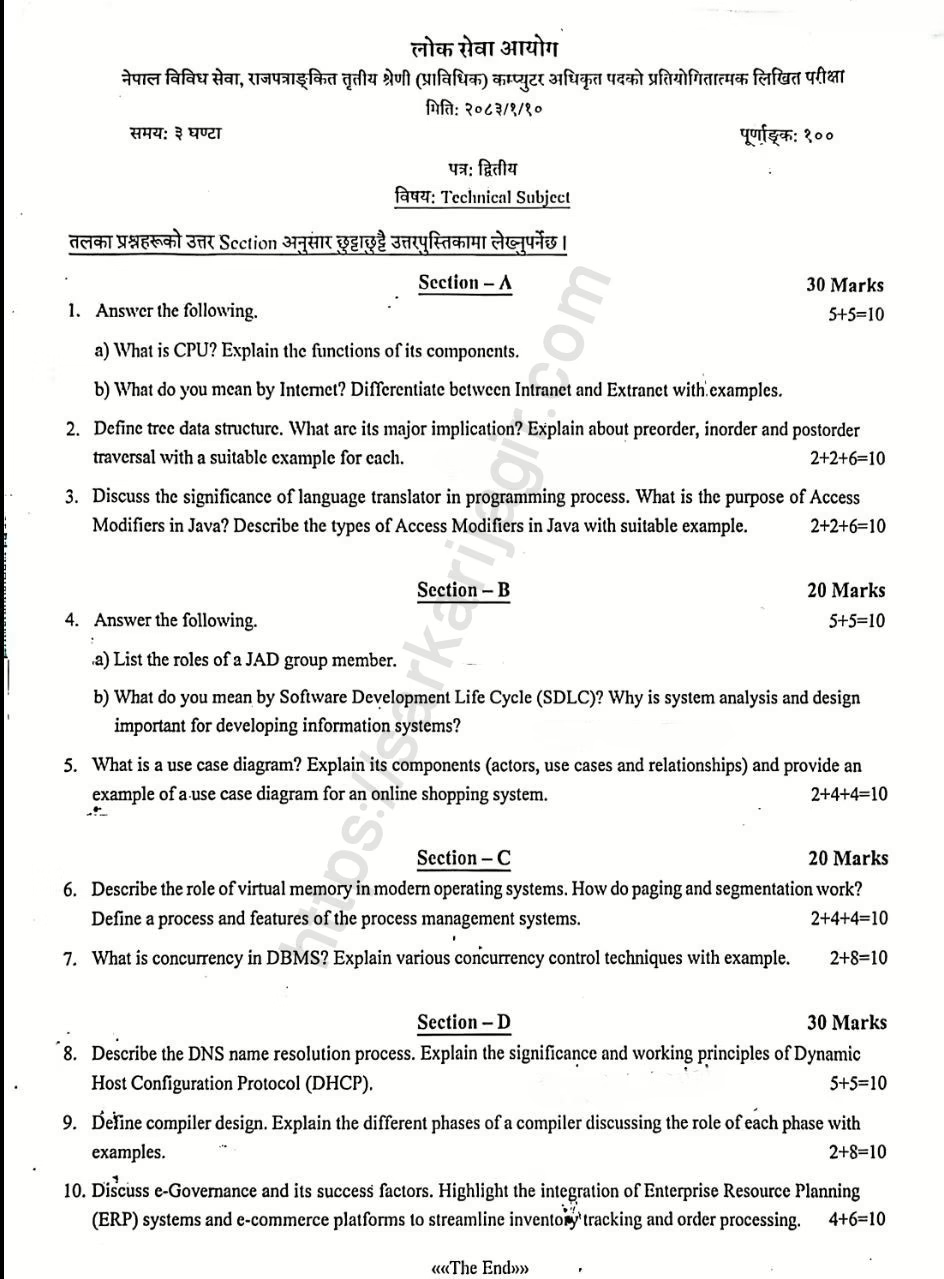
लोक सेवा आयोग
नेपाल विविध सेवा, राजपत्राङ्कित तृतीय श्रेणी (प्राविधिक)
कम्प्युटर अधिकृत पदको प्रतियोगितात्मक लिखित परीक्षा
मितिः २०८३/१/१०
समयः ३ घण्टा
पूर्णाङ्कः १००
पत्रः द्वितीय
विषय: Technical Subject
तलका प्रश्नहरूको उत्तर Section अनुसार छुट्टाछुट्टै उत्तरपुस्तिकामा लेख्नुपर्नेछ ।
Section – A ———————————————————————————- 30 Marks
1. Answer the following. 5+5=10
a) What is CPU? Explain the functions of its components.
b) What do you mean by Internet? Differentiate between Intranet and Extranet with examples.
2. Define tree data structure. What are its major implication? Explain about preorder, inorder and postorder traversal with a suitable example for each. (2 + 2 + 6 = 10)
3. Discuss the significance of language translator in programming process. What is the purpose of Access Modifiers in Java? Describe the types of Access Modifiers in Java with suitable example. (2+2+6=10)
Section – B ———————————————————————————- 20 Marks
4. Answer the following. (5+5=10)
a) List the roles of a JAD group member.
b) What do you mean by Software Development Life Cycle (SDLC)? Why is system analysis and design important for developing information systems?
5. What is a use case diagram? Explain its components (actors, use cases and relationships) and provide an example of a use case diagram for an online shopping system. (2 + 4 + 4 = 10)
Section – C ———————————————————————————- 20 Marks
6. Describe the role of virtual memory in modern operating systems. How do paging and segmentation work? Define a process and features of the process management systems. (2 + 4 + 4 = 10)
7. What is concurrency in DBMS? Explain various concurrency control techniques with example. (2+8=10)
Section – D ———————————————————————————- 30 Marks
8. Describe the DNS name resolution process. Explain the significance and working principles of Dynamic Host Configuration Protocol (DHCP). (5+5=10)
9. Define compiler design. Explain the different phases of a compiler discussing the role of each phase with examples. (2+8=10)
10. Discuss e-Governance and its success factors. Highlight the integration of Enterprise Resource Planning (ERP) systems and e-commerce platforms to streamline inventory tracking and order processing. (4+6=10)
<<<<< The End>>>
You May also like
Banking Career Computer Operator corporation Vacancey First Paper General Knowledge Government Job Kharidar Koshi Province Lok Sewa Aayog Nayab Subba Nepal Bank Ltd. Nepal Rastra Bank Officer First Paper Old Question Old Questions Province Public Service Commission Public Service Commission Rastriya Banijya Bank Result Sarkari Jagir Section officer Sifaris Syllabus Vacancy Written Exam
view full Questions from here